

ventilated fibc bulk bag
Capro Industries supplies ventilated FIBC bulk bags — also called mesh bulk bags or breathable bulk bags — designed to allow airflow through the bag wall to prevent moisture buildup, condensation, and the mold and spoilage that follow. Built from open-weave polypropylene fabric, woven netting, or a combination of both, ventilated bags are the standard packaging solution for onions, potatoes, garlic, firewood, and other agricultural commodities that require air circulation during storage and transit. In stock for same-day shipping from Los Angeles, Dallas, and New Hampshire.
Description
The open-weave construction of ventilated FIBCs allows air to circulate freely around the product inside the bag — preventing the condensation that builds up when warm, moisture-releasing produce is sealed inside an impermeable fabric. Condensation leads to mold growth, which leads to product loss. Ventilated bags eliminate this risk by allowing the product to breathe throughout storage and transit.
Features
Open-weave woven polypropylene, PP netting, or combination fabric construction for maximum airflow. Available in a range of mesh aperture sizes to match product dimensions and required airflow rates. Strong, UV-stabilized construction for outdoor storage and handling. Compatible with standard forklift and pallet handling. Same load capacity and loop configurations as standard FIBCs.
Sizing Calculator
To help you choose a standard size bag, our cubic calculator is a great place to begin.
Calculated container cubic capacity
FIBC / Bulk Bag Styles



Why ventilation matters for bulk agricultural packaging
When produce — particularly root vegetables and alliums like onions and garlic — is packed in a sealed bulk bag, the natural respiration of the product releases moisture vapor. In a standard FIBC with impermeable fabric, that moisture has nowhere to go. It condenses on the inside of the bag and on the product surface, creating the warm, humid conditions that accelerate mold growth and rot.
A ventilated FIBC solves this by allowing air to circulate continuously through the bag wall, carrying moisture vapor away from the product before it can condense. The result is dramatically lower product loss through storage and transit — particularly important for long-haul shipments, cold storage transitions, and extended warehouse holds.
Applications
Onions & garlic
The most common ventilated FIBC application. Onions and garlic are high-respiration crops that generate significant moisture during storage. Open-weave construction allows the continuous airflow these crops require to maintain quality from harvest through distribution.
Potatoes & root vegetables
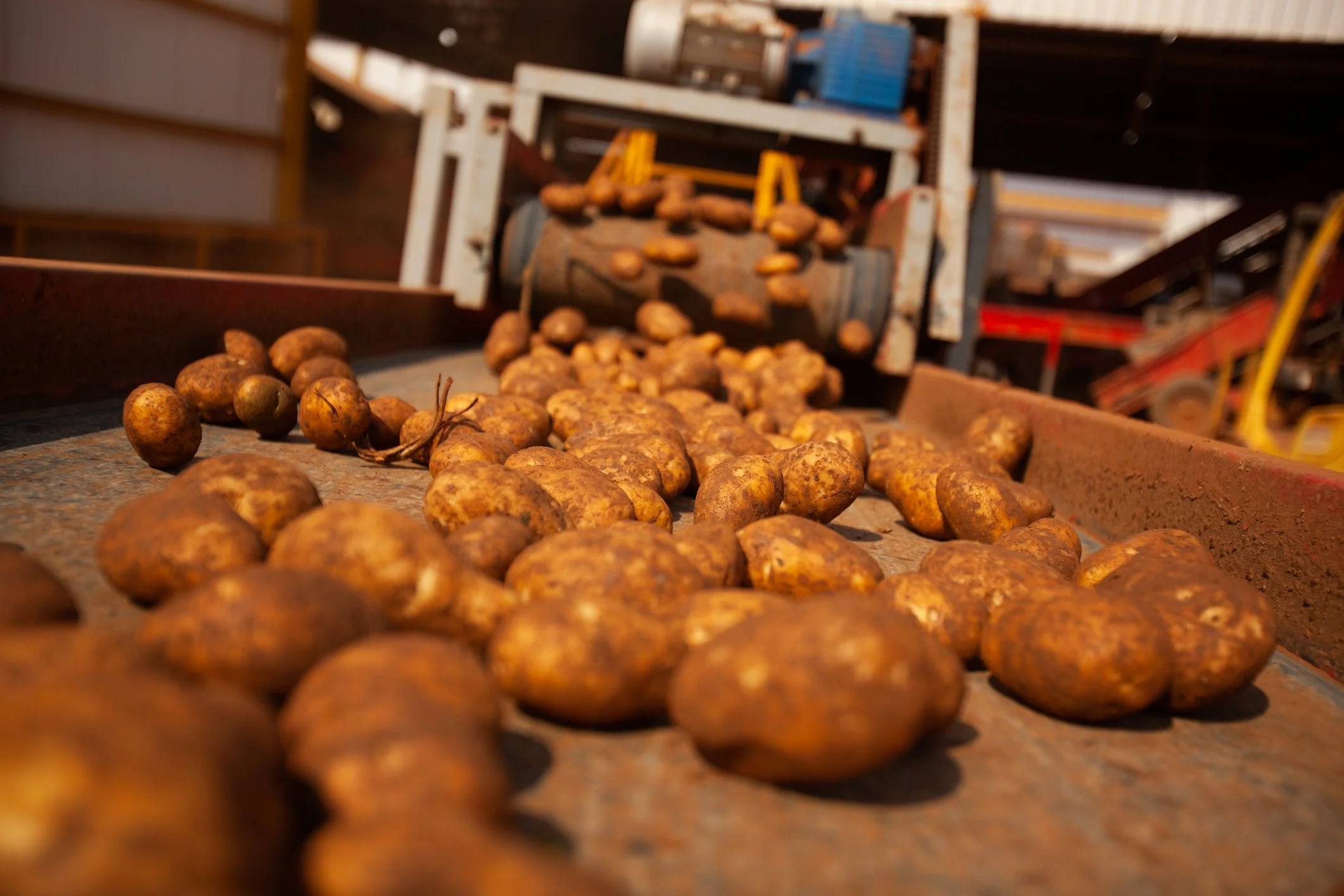
Potatoes, sweet potatoes, beets, and other root vegetables require airflow to prevent sweating and surface mold during storage and transport. Ventilated bags are used across potato packing operations from field to distribution center.
Firewood & biomass
Firewood, wood pellets, wood chips, and other biomass products benefit from ventilated packaging for airflow during drying and moisture reduction in storage. Open-weave construction allows the product to continue drying after packing.
Citrus & tree fruit
Oranges, lemons, and tree fruits packed in high volumes for distribution use ventilated FIBCs to maintain airflow and reduce ethylene and moisture buildup that accelerates ripening and decay.
Other agricultural commodities
Seed corn, dried legumes, nuts, and other agricultural commodities that require airflow during storage and transit to maintain quality and prevent moisture-related spoilage.
Construction options
Ventilated FIBCs are available in several fabric configurations depending on airflow requirements and product dimensions:
Open-weave woven PP — standard woven polypropylene fabric with a looser weave pattern. Provides moderate airflow with good structural strength. Suitable for most produce applications.
PP netting — high-density polyethylene or polypropylene netting for maximum airflow. Used for applications where heavy ventilation is required or where visibility of product is desired.
Combination fabric — woven PP panels combined with mesh or netting panels. Balances structural integrity with targeted airflow zones. Common in applications requiring both strength and ventilation.
Aperture size — the opening size in the weave or mesh — can be specified to match product dimensions and prevent product sifting through the bag wall.
Standard specifications
Safe working load: 500 kg to 2,000 kg (1,100 lb to 4,400 lb)
Safety factor: 5:1 or 6:1
Fabric: open-weave woven PP, PP netting, or combination — UV stabilized
Aperture size: customizable to match product and airflow requirements
Top configurations: duffle top, open top, spout top
Bottom configurations: spout bottom, flat bottom
Loop styles: 4-loop standard; cross-corner and stevedore loop options
Printing: up to 4 colors on solid fabric panels; label pouches available
UV stabilization: standard for outdoor storage applications
Why agricultural packers and produce distributors choose Capro
In-stock availability — ventilated FIBCs ship same day from our US warehouses in Los Angeles, Dallas, and New Hampshire. Ready for harvest season without lead time risk
Aperture and fabric expertise — our team helps agricultural packers select the right weave, aperture size, and fabric combination for their specific product and storage requirements
No minimums on standard sizes — order what you need for a trial or a full season program without committing to a container load
UV-stabilized construction — our ventilated bags are built for outdoor field and yard storage conditions, not just warehouse use
Competitive pricing — direct manufacturer relationships mean strong pricing for both small runs and high-volume seasonal programs
Contact Capro Industries to request samples, specifications, or a quote on ventilated FIBC bulk bags. We work with agricultural packers, produce distributors, and commodity handlers across the United States to find the right open-weave construction for your product, storage conditions, and distribution requirements.